Ski lifts are the bane of snowboarders and skiers. Standing, shuffling along the lift lines for minutes upon minutes and then the long ride on the lift. So, how long are ski lift rides in Europe.

How Long Are Ski Lift Rides in Europe Overview
Planning a ski holiday in Europe? You may be wondering how long you’ll actually spend on the lifts each day. There are thousands of lifts across the Alps, Pyrenees, Dolomites, and Scandinavia, with the ride ride varying widely. Timings depend on the type of lift, the age of the system, the height gain and the terrain covered. Whereas some lifts whisk you to the top in just a minute or two, others can take more than 20 minutes from base to summit. So, how long are ski lift rides in Europe? Answers below.
Average Ski Lift Ride Times In Europe
In most major European ski resorts you can expect to see similar list types. Ski lift rides take approximately:
- Chairlifts: 4–10 minutes
- Gondolas: 6–15 minutes
- Cable cars (Aerial trams): 5–12 minutes
- Drag lifts (button lifts/T-bars): 2–7 minutes
These are averages and there are many factors that will impact the actual ride time of ski lifts. Predominately this depends heavily on the length of the lift and the vertical rise.
Why Lift Ride Times Vary So Much?
Ski lift times in Europe depend on several factors.
1. The lift type
Modern detachable chairlifts and gondolas move faster and slow down only in stations, reducing travel time. Older fixed-grip lifts move at slower speeds.
2. Vertical gain
If a lift climbs a long way. For example from a base village to a high alpine area you can easily expect a lift to take 10–20 minutes.
3. Length of the ski lift
Across Europe there are some lifts that cover huge distances linking different valleys, especially in huge ski resorts like the 3 Vallées or Portes du Soleil.
4. Wind and weather
Due to safety, lift operators need to keep a keen eye on the weather. High winds and poor visibility make for longer journey times with ski lifts having to slow down or pause whilst in operation. Not even considering when they need to close due to the weather.
Examples of Ski Lift Ride Times in Europe
Here are some well-known European ski resorts and typical lift durations:
Chamonix, France
- The Aiguille du Midi cable car takes around 20 minutes, including a mid-station change, climbing to 3,842 m.
Zermatt, Switzerland
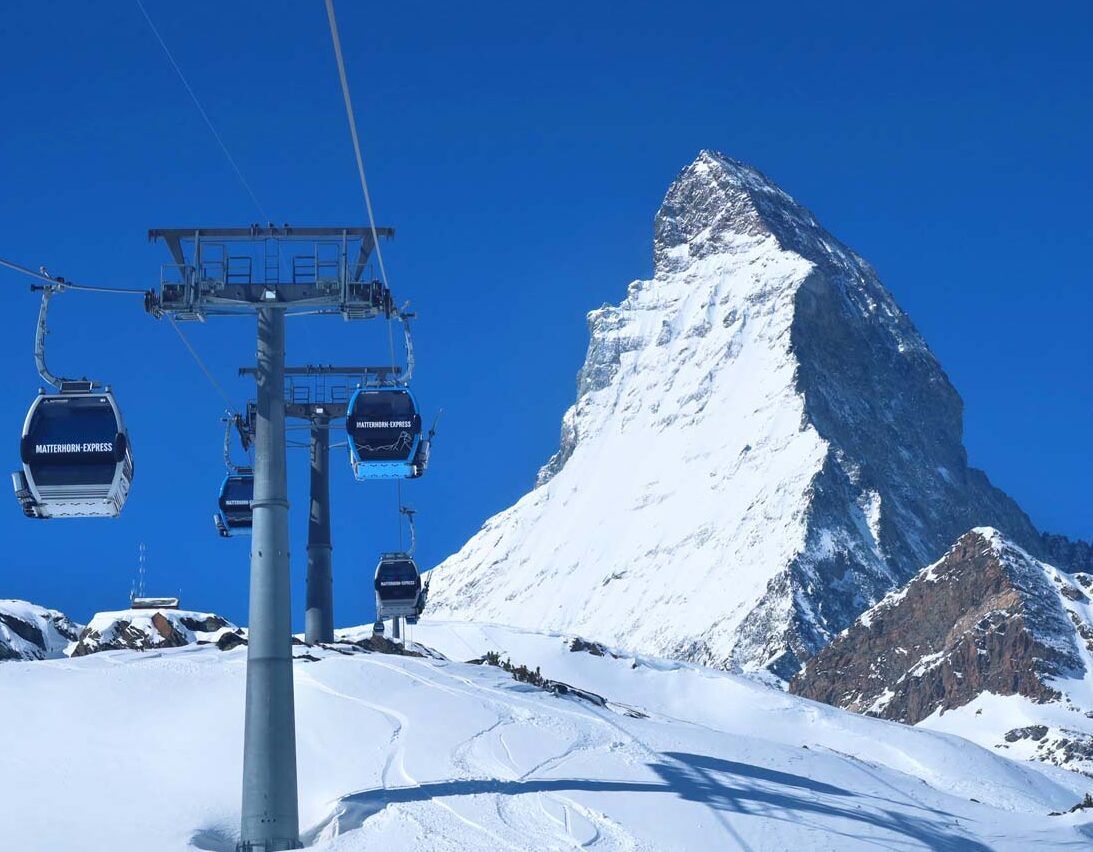
- The Matterhorn Glacier Ride (3S gondola) is about 9 minutes from Trockener Steg to the Klein Matterhorn.
Val Thorens / 3 Vallées, France
- Most modern chairlifts take 4–7 minutes thanks to high-speed detachable systems.
Ischgl, Austria
- Gondolas from the town take 12–15 minutes to reach the main ski area.
Laax, Switzerland
- The Crap Sogn Gion gondola takes around 10 minutes.
Ski Amade, Austria
- Long linking lifts take 10–14 minutes.
What Are the Longest Ski Lift Rides in Europe?
Some of the European lifts are famously long. These are usually found when accessing glaciers or high Alpine terrain. For instance, some of the below are example of long and unique ski lifts in Europe:
- Vanoise Express (La Plagne–Les Arcs): approximately 4 minutes, but covers 1.8 km at record speed
- Aiguille du Midi cable car (Chamonix): approximately 20 minutes
- Skyway Monte Bianco (Italy): approximately 10 minutes per section
- Matterhorn Glacier Ride (Zermatt): approximately 9 minutes
- Stubai Glacier – 3S Eisgrat Cable Car (Austria)
- Zugspitze Gondola (Germany)
Do Long Lift Rides Affect Your Day?
Long lifts around ski resorts are often balanced by fast lifts elsewhere in the ski area. Modern European resorts focus heavily on capacity and flow of skiers and snowboarders, meaning you often find:
- High-capacity gondolas
- Modern chairlifts
- Upgraded linking lifts
Consequently reducing queues and increases slope time.
Conclusion: Lift Ride Times Vary, but Europe Offers Fast, Efficient Access
So, how long are ski lift rides in Europe? In most cases, you’ll find yourself on a lift for 4–12 minutes at a time. Very occasionally exceeding 15–20 minutes. Europe has some of the newest and fastest lift networks in the world. Meaning less time sitting and more time skiing.